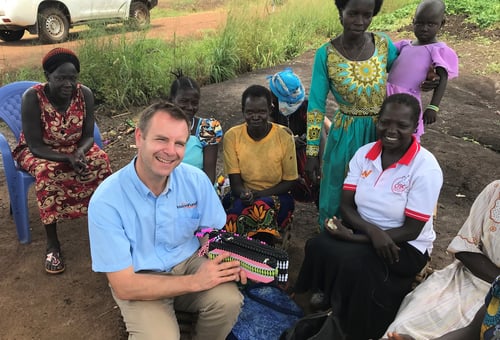
Savings and microfinance in Moyo, Uganda
In the microfinance sector, success is often measured in numbers – loans disbursed, businesses launched, and households reached. But at VisionFund, we recognise that true financial inclusion requires us to look beyond the balance sheet and confront a far more sobering reality: the immense power Microfinance Institutions (MFIs) hold can literally make or break a child’s future.
While our direct engagement with children is limited, our indirect influence on their lives is profound. The financial tools we provide enter the ecosystem of a family. Because of this, we are continually reflecting on a critical question: Are our interventions truly doing good, or could they be inadvertently causing harm?
The Hidden Cost of Poor Product Design
Financial empowerment is meant to relieve the burdens on a household, not transfer them to its most vulnerable members. Yet, an uncomfortable truth of our industry is that when financial products are poorly designed, the consequences ripple outward.
If a household faces sudden business demands or the pressure of aggressive loan repayments, they may resort to the harmful engagement of children to cope. This is a failure we cannot accept. Keeping children safe at the heart of microfinance means we must design and deliver our products and services with meticulous care. Safeguarding cannot be an afterthought; it must be engineered into the very terms of the loans we provide, ensuring families are supported, not squeezed.
Moving From Policy to Architecture
Declaring a zero-tolerance policy for child labour is essential, but good intentions are not enough to protect a child. Financial institutions must translate these ethical stances into rigorous operational architecture.
For us, this means creating detailed, actionable procedures to proactively address child labour within the communities we serve. Every policy, product, and interaction is weighed against one prevailing objective: do no harm to the child.
A Call for Responsible Business
Safeguarding is not merely a compliance checklist; it is the conscience of our operations. As financial institutions, we must make it our mission to pursue safe and responsible business practices that actively prevent and respond to neglect, exploitation, and abuse.
When we provide capital, savings, or insurance to a family, we are making an investment in their future. It is our absolute responsibility to ensure that the future we are helping to build is one where every child is safe, protected, and free to simply be a child.