
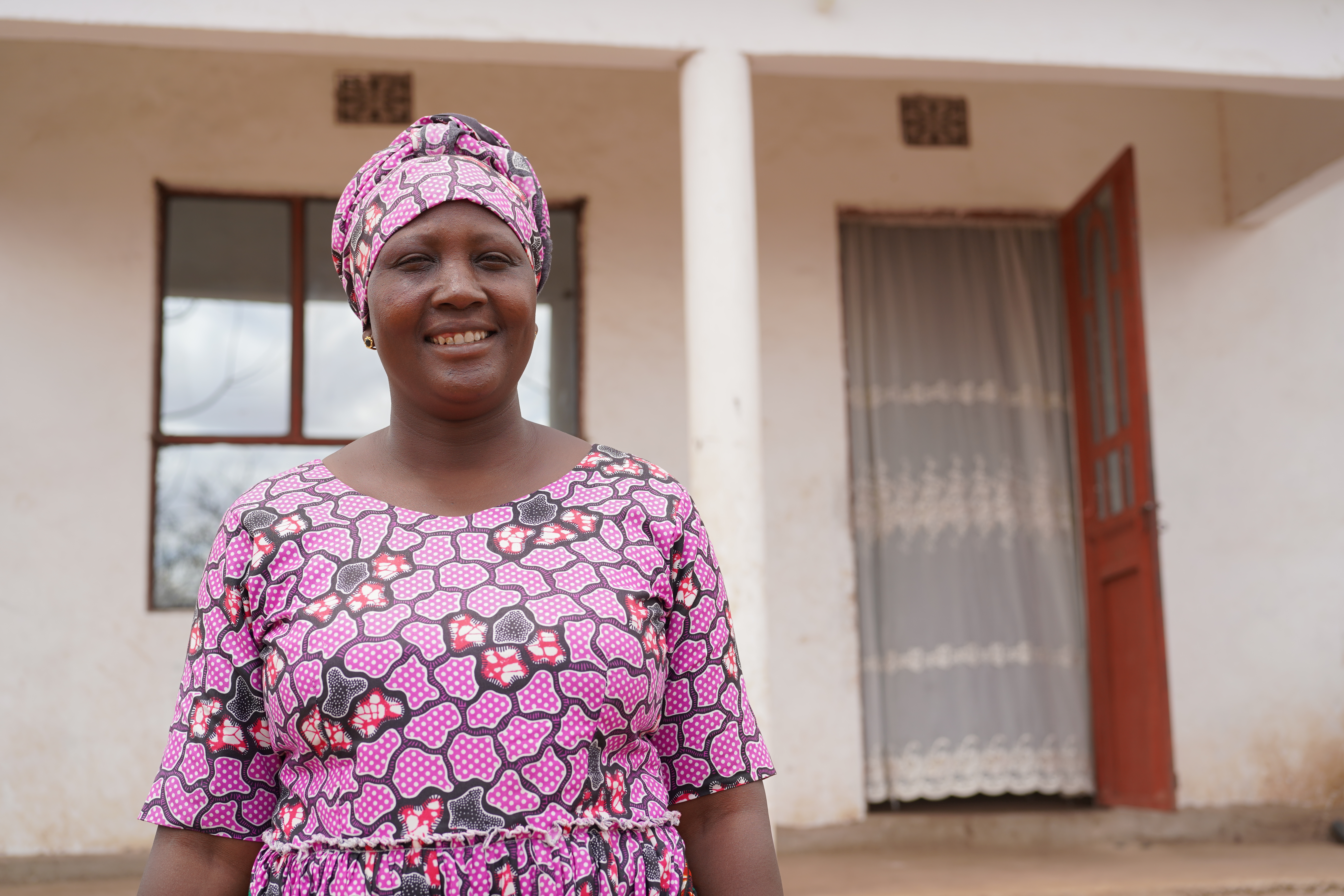
For Grace, life in a village in northern Tanzania was never easy. Her husband, a pastor without a salary, relied solely on small-scale farming. They plant maise, green peas, and lablab, a type of legume grown in Tanzania.
Their land was less than two acres and barely yielded enough. Two bags of maise would earn TZS 60,000 ($24) a year, a single bag of lablab TZS 50,000 ($20), and 18 kilograms of green peas at TZS 10,000 ($4).
“Our income is not enough, especially because they are seasonal,” Grace says.
Many days, their meals were sparse, often just maise flour, typically used to feed chickens. Fetching water meant a six-kilometre bicycle trip. Opportunities were few. And women, bound by cultural norms, were often overpowered by men.
But Grace refused to accept that life was set in stone. She convinced her husband to let her join a women’s savings group, Enyoito, meaning “wake up” in Swahili. It is one of the Finance Accelerating Savings Group Transformation (FAST) established by World Vision in 2014.
Respecting Maasai traditions, men and women were grouped separately. “I told my husband it would benefit people in our community,” Grace says, and indeed it did.
Grace and the other members of the savings group received training in financial literacy, entrepreneurship, and the Empowered Worldview program. Suddenly, possibilities that had been invisible before became real.
“We didn’t realise before that we can sell milk from cows and goats,” she laughs.
With loans from VisionFund Tanzania, she bought poultry inputs, started a small market business selling used clothes three times a week, and decorated for village events. Today, she earns about TZS 50,000 ($20) per week from her market sales and TZS 150,000 ($60) during special events.
As secretary of Enyoito, Grace manages record-keeping and ensures every woman in the group has a voice. Some women, she notes, “lack decision-making power at home, especially on what to do with the loans they access.”
To counter this, the group often involves husbands and directly purchases inputs for business projects together, preventing loans from being diverted. Their shared approach strengthens both their confidence and their finances.
The results speak for themselves. Since her first loan of TZS 200,000 ($80) in 2014, Grace has accessed 21 loan cycles, with her group receiving 18 cycles and disbursing more than TZS 100 million ($40,000) in total.
She’s expanded her poultry project from two goats to thirty, buys up to 300 chicks, and reinvests in her businesses. She has been able to pay her children's school fees, renovate her home, and even see her firstborn graduate from university, who now contributes materials to her decoration business.
Being a mother of four, a grandmother, a businesswoman, and a community leader is no small feat.
“It’s all about discipline, proper time management, and setting priorities,” she says.
Her two younger children are in secondary and vocational school, supported entirely by the income she generates.
Beyond financial gains, Grace emphasises the power of women supporting one another.
“What I like most about the group is that we support each other. We save together, try new things, and take calculated risks,” she says.
Her leadership has cultivated a culture of empowerment among the women in Enyoito. Through training, they learned to assert their opinions, take control of household finances, and envision possibilities previously unimaginable.
Grace has high hopes for the future. She dreams to own a vehicle to transport her decoration materials to reduce her transportation costs. But her ultimate goal is stability for her family and to inspire more women to step into leadership roles within their homes and communities.
###
Their land was less than two acres and barely yielded enough. Two bags of maise would earn TZS 60,000 ($24) a year, a single bag of lablab TZS 50,000 ($20), and 18 kilograms of green peas at TZS 10,000 ($4).
“Our income is not enough, especially because they are seasonal,” Grace says.
Many days, their meals were sparse, often just maise flour, typically used to feed chickens. Fetching water meant a six-kilometre bicycle trip. Opportunities were few. And women, bound by cultural norms, were often overpowered by men.
But Grace refused to accept that life was set in stone. She convinced her husband to let her join a women’s savings group, Enyoito, meaning “wake up” in Swahili. It is one of the Finance Accelerating Savings Group Transformation (FAST) established by World Vision in 2014.
Respecting Maasai traditions, men and women were grouped separately. “I told my husband it would benefit people in our community,” Grace says, and indeed it did.
Grace and the other members of the savings group received training in financial literacy, entrepreneurship, and the Empowered Worldview program. Suddenly, possibilities that had been invisible before became real.
“We didn’t realise before that we can sell milk from cows and goats,” she laughs.
With loans from VisionFund Tanzania, she bought poultry inputs, started a small market business selling used clothes three times a week, and decorated for village events. Today, she earns about TZS 50,000 ($20) per week from her market sales and TZS 150,000 ($60) during special events.
As secretary of Enyoito, Grace manages record-keeping and ensures every woman in the group has a voice. Some women, she notes, “lack decision-making power at home, especially on what to do with the loans they access.”
To counter this, the group often involves husbands and directly purchases inputs for business projects together, preventing loans from being diverted. Their shared approach strengthens both their confidence and their finances.
The results speak for themselves. Since her first loan of TZS 200,000 ($80) in 2014, Grace has accessed 21 loan cycles, with her group receiving 18 cycles and disbursing more than TZS 100 million ($40,000) in total.
She’s expanded her poultry project from two goats to thirty, buys up to 300 chicks, and reinvests in her businesses. She has been able to pay her children's school fees, renovate her home, and even see her firstborn graduate from university, who now contributes materials to her decoration business.
Being a mother of four, a grandmother, a businesswoman, and a community leader is no small feat.
“It’s all about discipline, proper time management, and setting priorities,” she says.
Her two younger children are in secondary and vocational school, supported entirely by the income she generates.
Beyond financial gains, Grace emphasises the power of women supporting one another.
“What I like most about the group is that we support each other. We save together, try new things, and take calculated risks,” she says.
Her leadership has cultivated a culture of empowerment among the women in Enyoito. Through training, they learned to assert their opinions, take control of household finances, and envision possibilities previously unimaginable.
Grace has high hopes for the future. She dreams to own a vehicle to transport her decoration materials to reduce her transportation costs. But her ultimate goal is stability for her family and to inspire more women to step into leadership roles within their homes and communities.
###