
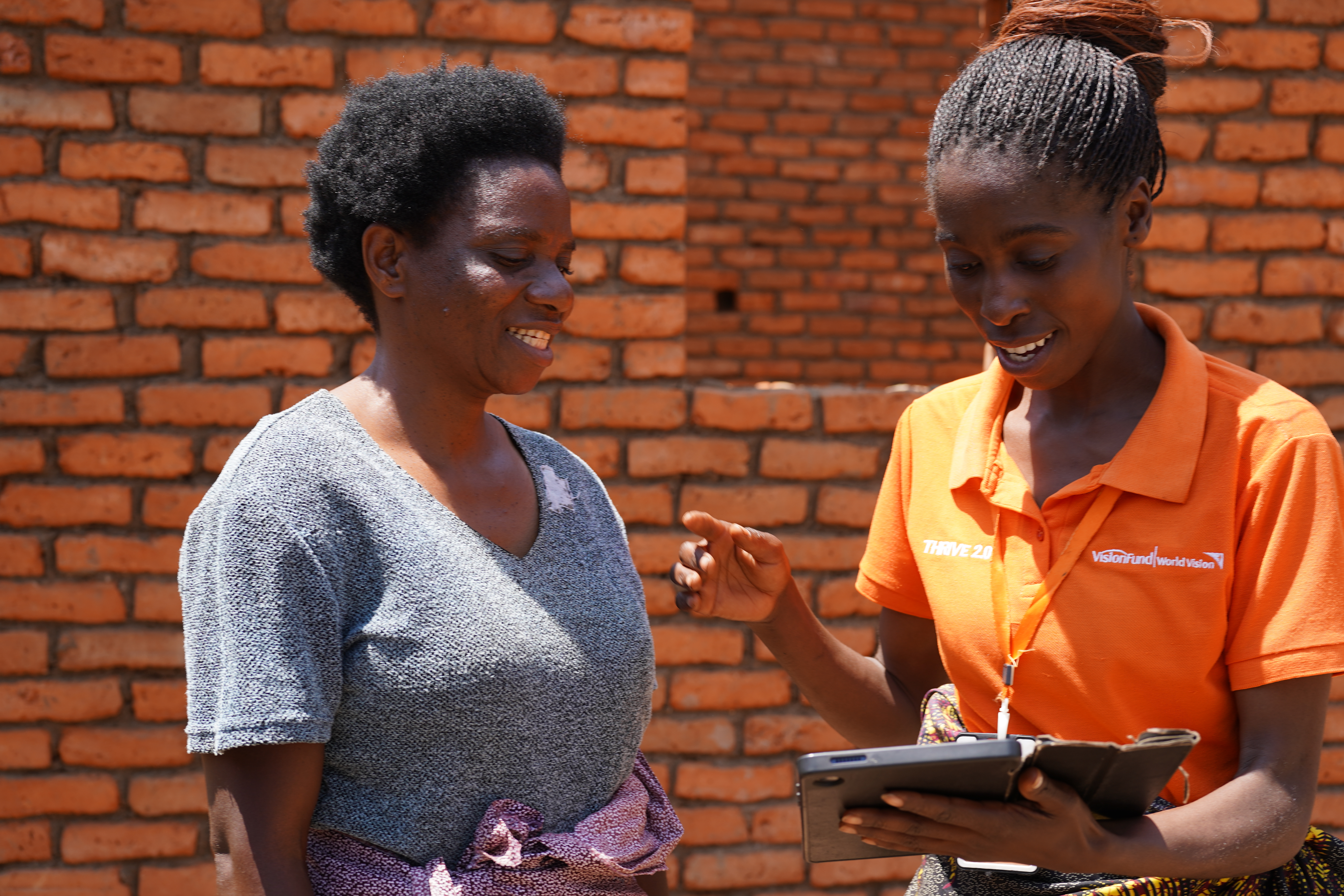
When we arrived in Mponera town in Malawi, the air was filled with music and laughter. The members of the savings group had gathered to welcome us, clapping and dancing in a joyful rhythm that seemed to make the dusty ground come alive. Their energy was contagious and before we knew it, we were swaying along with them. Among the women dancing with the brightest smile was Olipa .
Mponera is a rural area where most families depend on small-scale agriculture to survive. But behind the smiles and strong community spirit lies a reality of hardship — limited access to clean water, healthcare, and stable income sources. Many families struggle to make ends meet, and a single setback, like illness or poor harvest, can easily push them into crisis.
When we sat down with Olipa after the dance, the delicious smell of freshly cooked fritters filled the air. With a warm smile, she invited us into her small kitchen and proudly showed us how she made them.
Olipa, a mother of four children aged 19, 17, 14, and 11, has always been hardworking. She cooks and sells fritters, grows maize, beans, and tomatoes, and raises goats and chickens.
But back then, life was tough. Since her divorce in 2016, Olipa has been raising her kids alone.
“We only ate once a day, consuming only potatoes and water,” she shares quietly. “I also couldn’t take my children to the hospital when they were sick.”
One of her most painful memories is from 2024, when her eldest child fell ill with malaria and needed urgent hospital care. She hired a taxi and paid MWK 62,000 ($35) to the vehicle’s owner. Until now, she is still paying for the loan but her remaining balance now is MWK 25,000 ($14).
Previously, Olipa did casual work just to make ends meet as her children required food, school uniforms and fees. Her income then was between MWK 40,000-50,000 ($23-29) per month, which was barely enough for food, let alone savings.
Everything began to change in 2025. One day, she saw World Vision Malawi field officers, and this spurred her curiosity. Then, she approached a World Vision promoter who introduced her to VisionFund, the financial inclusion arm of World Vision. Soon after, her savings group where she serves as chairperson was,introduced to the idea of getting a group loan.
Her first loan of MWK 150,000 ($86) from VisionFund Malawi, which she received in March 2025, became the turning point. She used the money to buy farm input and pay for the rentals of a bigger garden. This decision not only improved her farming yields but also allowed her to grow crops even during the dry season.
“Before this, my crops were rain-fed,” she explains. “To get by during the dry season, I decided to rent land for farming where there is a water irrigation system available throughout the year.”
By September 2025, she had already taken a second loan of MWK 70,000($40) to expand both her fritters business and her farm. Her hard work began paying off quickly. Now, she earns MWK 83,000 ($47) monthly from both businesses. Her livestock, 15 goats and 25 chickens, are only used for emergency needs.
The impact on her family’s life has been profound. Olipa can now pay her two youngest children’s school fees without worrying, and they can afford to eat three meals a day.
“For breakfast, we usually eat porridge with sugar and tea. For lunch and dinner, we usually eat fish and meat,” she says happily.
Her dreams don’t stop here. Her vision is to one day build a house and own a motorcycle to support her business and children’s education.
Slowly, her dreams are becoming reality. Their new house has been under construction since August 2025 and is nearing completion.
###
Mponera is a rural area where most families depend on small-scale agriculture to survive. But behind the smiles and strong community spirit lies a reality of hardship — limited access to clean water, healthcare, and stable income sources. Many families struggle to make ends meet, and a single setback, like illness or poor harvest, can easily push them into crisis.
When we sat down with Olipa after the dance, the delicious smell of freshly cooked fritters filled the air. With a warm smile, she invited us into her small kitchen and proudly showed us how she made them.
Olipa, a mother of four children aged 19, 17, 14, and 11, has always been hardworking. She cooks and sells fritters, grows maize, beans, and tomatoes, and raises goats and chickens.
But back then, life was tough. Since her divorce in 2016, Olipa has been raising her kids alone.
“We only ate once a day, consuming only potatoes and water,” she shares quietly. “I also couldn’t take my children to the hospital when they were sick.”
One of her most painful memories is from 2024, when her eldest child fell ill with malaria and needed urgent hospital care. She hired a taxi and paid MWK 62,000 ($35) to the vehicle’s owner. Until now, she is still paying for the loan but her remaining balance now is MWK 25,000 ($14).
Previously, Olipa did casual work just to make ends meet as her children required food, school uniforms and fees. Her income then was between MWK 40,000-50,000 ($23-29) per month, which was barely enough for food, let alone savings.
Everything began to change in 2025. One day, she saw World Vision Malawi field officers, and this spurred her curiosity. Then, she approached a World Vision promoter who introduced her to VisionFund, the financial inclusion arm of World Vision. Soon after, her savings group where she serves as chairperson was,introduced to the idea of getting a group loan.
Her first loan of MWK 150,000 ($86) from VisionFund Malawi, which she received in March 2025, became the turning point. She used the money to buy farm input and pay for the rentals of a bigger garden. This decision not only improved her farming yields but also allowed her to grow crops even during the dry season.
“Before this, my crops were rain-fed,” she explains. “To get by during the dry season, I decided to rent land for farming where there is a water irrigation system available throughout the year.”
By September 2025, she had already taken a second loan of MWK 70,000($40) to expand both her fritters business and her farm. Her hard work began paying off quickly. Now, she earns MWK 83,000 ($47) monthly from both businesses. Her livestock, 15 goats and 25 chickens, are only used for emergency needs.
The impact on her family’s life has been profound. Olipa can now pay her two youngest children’s school fees without worrying, and they can afford to eat three meals a day.
“For breakfast, we usually eat porridge with sugar and tea. For lunch and dinner, we usually eat fish and meat,” she says happily.
Her dreams don’t stop here. Her vision is to one day build a house and own a motorcycle to support her business and children’s education.
Slowly, her dreams are becoming reality. Their new house has been under construction since August 2025 and is nearing completion.
###
Related Stories
- From handouts to harvests
- Flour and Freedom: How a Small Business Loan Helped a Baker in Malawi Grow Her Business
- From Eggs to Enterprise: Meet the Woman Who Scaled Her Poultry Farm
- From Fear to Faith: How One Mother Transformed Her Family’s Future
- From Scarcity to Solar Power: How Samuel Built a Thriving Business in Malawi
- How Financial Inclusion Built a Future: Abel’s Story of Small Beginnings
- Abambisi's Journey to stability with VisionFund Ghana
- Knowledge and Training Lead to Economic Empowerment
- How a WASH Loan Washed Away Financial Insecurity
- I Can Provide for My Family