
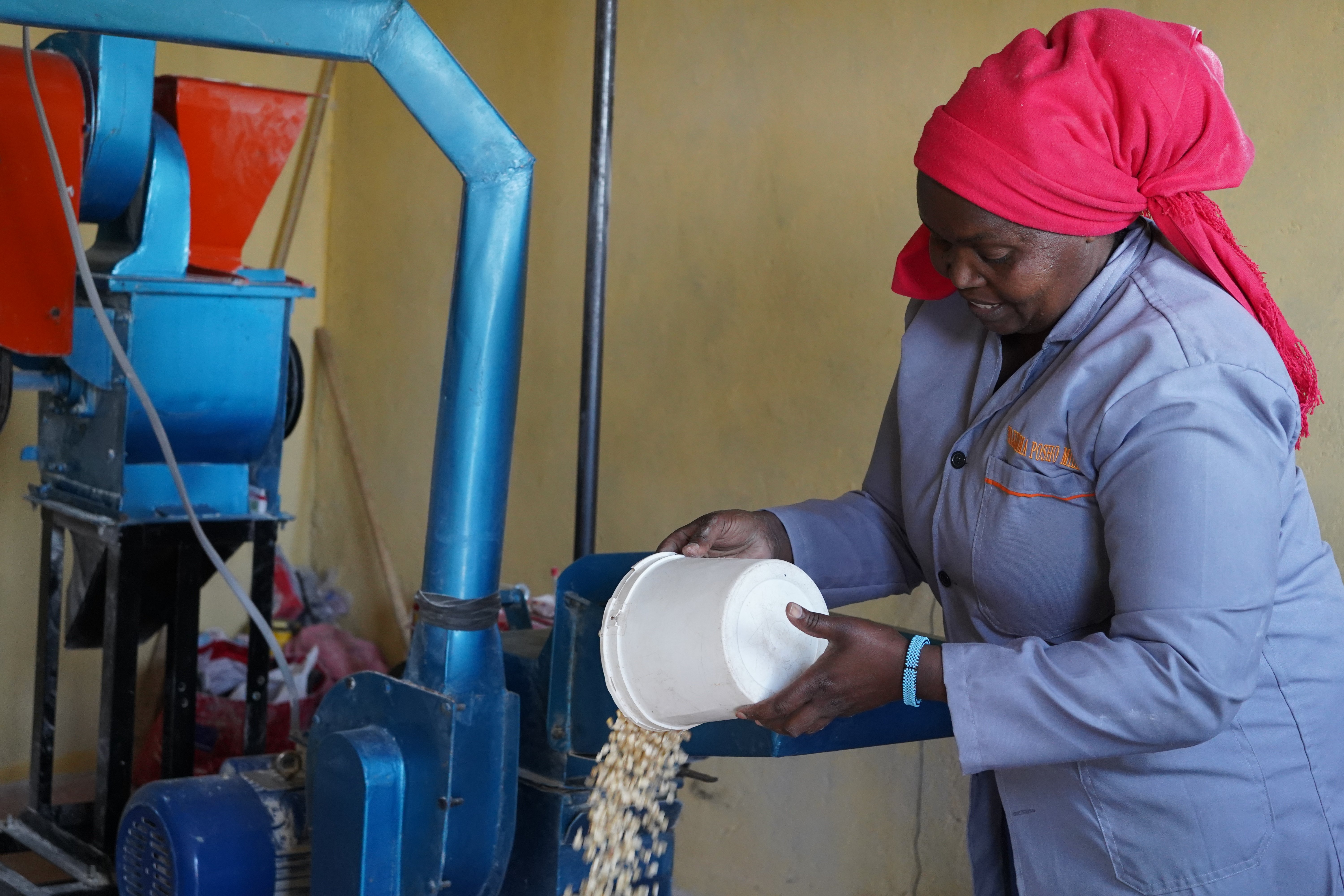
In a quiet village in Kyeni West subcounty in Kenya, lives Florence, a mother of four children, determined to give them a better future.
Life was extremely hard for Florence when she relocated from the town to her rural village in 2016. At that time, she was a single mother raising her first two children. However, opportunities were scarce in the rural area, and survival meant long days of manual labour and subsistence farming.
“When I came to the village, life was extremely hard. Unlike in town, where I could get small jobs, here I had to dig farms and depend on small harvests. Many times, what we grew could not even feed us for a month,” Florence recalls.
At that time, Florence felt like at the brink of giving up. She struggled to pay her children’s school fees, could not afford three meals a day, and often relied on her sister and other people’s kindness for food. Because of this, her children were malnourished, and their skin was not in good condition. They often relied on her sister and the kindness of other people for aid.
“I could barely earn KES 200 ($1.5) in a day from casual labour,” she says.
Eventually, she met her husband, a former teacher, and together they had two more children. Things have also started to improve since her sister introduced her to World Vision, where her children have been registered. Because of this, they have been able to receive aid, including a water tank and some food and non-food items.
Another door opened when VisionFund, the financial inclusion arm of World Vision, came to their village in 2024. Florence joined the Tanyai Tumaini and Mugachi Karemeno, a Savings for Transformation (S4T) group, introduced to her by her sister-in-law.
Through the Transforming Household Resilience in Vulnerable Communities (THRIVE 2030), an integrated programme by World Vision and VisionFund that empowers parents economically to break the cycle of poverty, she and other group members received a series of trainings. Among these are financial discipline and banking. She also attended the Empowered Worldview (BEWV) training with her husband, which dramatically changed their views about life and themselves.
“I stopped seeing myself poor and started seeing opportunities,” Florence says.
With her newfound confidence and financial knowledge, Florence took her first loan of KES 50,000 ($383) from VisionFund Kenya. The harvest was successful that she took a second loan of KES 75,000 ($575) in May 2025. This was followed by a third loan of KES 120,000 ($920) in May 2025. The latest loan, along with some personal savings, allowed her to purchase a posho mill and start a cereal business, a dream she had for years.
Today, Florence’s posho mill earns between KES 5,000-7,000 ($38-54) per day, while her dairy cows provide about KES 400 ($3) daily from milk sales. They also sell two trays of eggs a week, adding KES 1,200 ($9) to the household income.
Nutrition has improved dramatically, with her children now regularly enjoying milk, eggs, and chicken. Florence can already afford school fees, gifts for her children, and even a house helper. The family has also built their own home, using timber purchased from savings group share-outs. Her eldest child now works in Qatar's construction industry, a sign that the family is moving toward a more secure future.
Despite all these achievements, Florence continues to dream for her family. She wants her children to finish their education without worry, expand her business and launch her own milling brand, employ people in her community, and even buy a tractor.
“I want other women to know—one has to take a step and believe in themselves. Interact with people, gain knowledge, and learn from others. No situation is permanent. Everyone has a chance to move out of poverty,” she says.
Life was extremely hard for Florence when she relocated from the town to her rural village in 2016. At that time, she was a single mother raising her first two children. However, opportunities were scarce in the rural area, and survival meant long days of manual labour and subsistence farming.
“When I came to the village, life was extremely hard. Unlike in town, where I could get small jobs, here I had to dig farms and depend on small harvests. Many times, what we grew could not even feed us for a month,” Florence recalls.
At that time, Florence felt like at the brink of giving up. She struggled to pay her children’s school fees, could not afford three meals a day, and often relied on her sister and other people’s kindness for food. Because of this, her children were malnourished, and their skin was not in good condition. They often relied on her sister and the kindness of other people for aid.
“I could barely earn KES 200 ($1.5) in a day from casual labour,” she says.
Eventually, she met her husband, a former teacher, and together they had two more children. Things have also started to improve since her sister introduced her to World Vision, where her children have been registered. Because of this, they have been able to receive aid, including a water tank and some food and non-food items.
Another door opened when VisionFund, the financial inclusion arm of World Vision, came to their village in 2024. Florence joined the Tanyai Tumaini and Mugachi Karemeno, a Savings for Transformation (S4T) group, introduced to her by her sister-in-law.
Through the Transforming Household Resilience in Vulnerable Communities (THRIVE 2030), an integrated programme by World Vision and VisionFund that empowers parents economically to break the cycle of poverty, she and other group members received a series of trainings. Among these are financial discipline and banking. She also attended the Empowered Worldview (BEWV) training with her husband, which dramatically changed their views about life and themselves.
“I stopped seeing myself poor and started seeing opportunities,” Florence says.
With her newfound confidence and financial knowledge, Florence took her first loan of KES 50,000 ($383) from VisionFund Kenya. The harvest was successful that she took a second loan of KES 75,000 ($575) in May 2025. This was followed by a third loan of KES 120,000 ($920) in May 2025. The latest loan, along with some personal savings, allowed her to purchase a posho mill and start a cereal business, a dream she had for years.
Today, Florence’s posho mill earns between KES 5,000-7,000 ($38-54) per day, while her dairy cows provide about KES 400 ($3) daily from milk sales. They also sell two trays of eggs a week, adding KES 1,200 ($9) to the household income.
Nutrition has improved dramatically, with her children now regularly enjoying milk, eggs, and chicken. Florence can already afford school fees, gifts for her children, and even a house helper. The family has also built their own home, using timber purchased from savings group share-outs. Her eldest child now works in Qatar's construction industry, a sign that the family is moving toward a more secure future.
Despite all these achievements, Florence continues to dream for her family. She wants her children to finish their education without worry, expand her business and launch her own milling brand, employ people in her community, and even buy a tractor.
“I want other women to know—one has to take a step and believe in themselves. Interact with people, gain knowledge, and learn from others. No situation is permanent. Everyone has a chance to move out of poverty,” she says.
Related Stories
- Flour and Freedom: How a Small Business Loan Helped a Baker in Malawi Grow Her Business
- Dancing into a new life
- From Eggs to Enterprise: Meet the Woman Who Scaled Her Poultry Farm
- From Fear to Faith: How One Mother Transformed Her Family’s Future
- From Scarcity to Solar Power: How Samuel Built a Thriving Business in Malawi
- How Financial Inclusion Built a Future: Abel’s Story of Small Beginnings
- Rebuilding home, restoring livelihood
- Reviving Business After the Devastating Earthquake
- Rebuilding Livelihood After the Earthquake: Story of Resilience
- Rebuilding for a New Beginning